

During a root canal, your dentist numbs the tooth, removes the inflamed or infected pulp from inside it, cleans and disinfects the canals, and then fills and seals them so the tooth can stay in your mouth. Most people feel pressure rather than pain, the visit usually takes somewhere between 30 and 90 minutes depending on the tooth, and many patients go back to work or school the same day. Few words in dentistry carry more anxiety than “root canal,” yet the reality of the procedure is far more manageable than its reputation suggests.
At Dentistry on Main Street, a locally owned practice in New Port Richey, our team provides restorative dentistry solutions designed to preserve your natural teeth and restore your comfort. Dr. Sneha Patel and Dr. Michael Snyder take time to walk every patient through the process before treatment begins, so there are no surprises and no unnecessary stress.
Why a Root Canal May Be Necessary
A root canal becomes necessary when the soft inner tissue of a tooth, known as the pulp, becomes inflamed or infected. The pulp contains nerves and blood vessels, and it can be damaged by deep decay, a crack or chip in the tooth, trauma, or repeated dental procedures on the same tooth. Left untreated, an infected pulp can cause significant pain and eventually lead to an abscess, bone loss around the root, or loss of the tooth.
According to the American Association of Endodontists, the goal of treatment is to remove the inflamed or infected pulp, clean and disinfect the inside of the tooth, and then fill and seal it so the natural tooth can be saved. Because you are numbed for the procedure, the treatment itself is not expected to be painful.
Common signs that a root canal may be needed include:
- Lingering sensitivity: Pain from hot or cold that continues well after the food or drink is gone.
- Pain when biting: A tooth that aches or throbs when you chew or tap on it.
- Swelling or a gum bump: Tender, swollen gums or a pimple-like bump near one tooth.
- Discoloration: A tooth that darkens compared with the teeth around it, often after an injury.
- Night pain: A persistent ache that wakes you up or gets worse when you lie down.
Some infected teeth cause no symptoms at all and are found on a routine X-ray, which is one more reason regular checkups matter. Only an exam can confirm whether the pulp is involved or whether a simpler treatment will do.
What Happens Step by Step
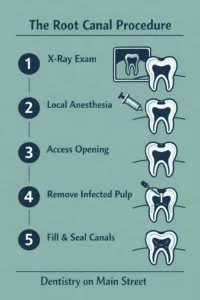
Many patients are surprised to learn that a root canal treatment is not dramatically different from getting a deep filling in terms of the overall experience. The AAE notes that treatment can usually be completed in one or two appointments, depending on the condition of the tooth. Here is what each stage generally involves.
Most patients feel pressure and vibration during cleaning, but not sharp pain. If you tend to feel nervous in the dental chair, tell us ahead of time. Dr. Snyder’s background includes helping patients who experience dental anxiety, and we can pace the appointment, take breaks, and explain each step as we go.
How Long the Appointment Takes
Timing depends mostly on which tooth is being treated. Front teeth usually have a single canal and are often finished in under an hour, while premolars and molars can have two to four canals and may need 90 minutes or a second visit. A tooth with an active infection is sometimes cleaned and medicated first, then sealed at a follow-up once it has settled.
The Role of a Crown After Treatment
After a root canal, a back tooth in particular is more susceptible to fracture, because it has often already lost structure to decay and the access opening removes a little more. Placing a dental crown over the tooth is typically recommended to restore its full strength and protect it from damage. The crown is custom-made to match the surrounding teeth and allows the tooth to function normally. If your tooth was cracked as well as infected, our post on whether a crown can fix a broken tooth explains how we decide between restoration options.
Root Canal vs. Tooth Extraction
Some patients ask whether it would be simpler to pull the tooth. Tooth extraction is sometimes the right call when a tooth is too broken down to restore, but saving a natural tooth usually has long-term advantages. The comparison below reflects the general tradeoffs we discuss during a consultation.
| Consideration | Root Canal and Crown | Extraction |
|---|---|---|
| Natural tooth | Kept in place, with its own root supporting the bone | Removed, leaving a gap |
| Next steps | A crown or filling to protect the tooth | An implant, bridge, or partial denture is often recommended to fill the space |
| Neighboring teeth | Stay in their normal positions | May drift toward the gap over time if it is not replaced |
| When it fits best | The tooth has enough healthy structure to restore | The tooth is severely fractured or cannot be restored predictably |
The AAE notes that with proper care, most teeth that have had root canal treatment can last a lifetime. We will always explain why we are recommending one path over the other so you can make an informed choice.
Recovery and What to Expect Afterward
Most patients are able to return to their normal routine the same day or the day after a root canal. Your lip, cheek, and tongue may stay numb for a few hours, so wait until the feeling returns before eating to avoid biting yourself. Some mild soreness or tenderness when biting is common for the first few days, particularly if there was an active infection before treatment, and over-the-counter pain relievers are usually sufficient to manage it.
Avoid chewing hard or sticky foods on the treated side until the final restoration is in place, since a temporary filling is not designed for heavy biting. Maintaining consistent brushing and flossing habits supports healing and helps protect the tooth long term. Staying on top of preventative dental care appointments after treatment allows our team to monitor the tooth on X-rays and catch any concerns early.
Knowing When to Call Us
While mild sensitivity after a root canal is normal, there are signs worth reaching out about. If you experience severe or worsening pain after the first few days, swelling that is not improving, a visible bump on the gum near the treated tooth, a lost temporary filling, or a bite that feels uneven, contact our office promptly. These may indicate that the area needs additional attention, and addressing them quickly leads to better outcomes. Our blog on dental emergencies treated by a dentist covers additional situations where timely care makes a meaningful difference, and our guide to the signs you need emergency dental care can help you decide how quickly to be seen.
Paying for Root Canal Treatment
The cost of a root canal depends on which tooth is treated, how many canals it has, and whether a crown is needed afterward, so we provide a personalized estimate after your exam. Many dental insurance plans cover part of endodontic treatment, and our team can help you check your benefits before your appointment. For patients without insurance or who want more flexibility, our financial options include CareCredit financing and an in-house membership plan.
Schedule Your Root Canal Consultation at Dentistry on Main Street
If you have been putting off treatment because of anxiety or uncertainty about what the procedure involves, we hope this gives you a clearer picture of what to expect. Root canals are a routine, well-established treatment, and Dr. Patel, Dr. Snyder, and our team are committed to making your experience as smooth and comfortable as possible from start to finish, from the first X-ray through the final crown.
Dentistry on Main Street is proud to serve the New Port Richey community with personalized, patient-centered care in a welcoming, locally owned practice. When you’re ready to get your tooth evaluated or have questions about your treatment options, contact our office to schedule your consultation.
Frequently Asked Questions About Root Canal Procedures
Does a root canal hurt?
The procedure itself should not be painful because the tooth and surrounding area are fully numbed first. Most patients describe pressure rather than pain. The toothache that brings people in is usually worse than the treatment, and removing the inflamed pulp is what relieves it. Mild tenderness for a few days afterward is common and typically manageable with over-the-counter pain relievers.
Can I drive myself home after a root canal?
In most cases, yes. A root canal is done with local anesthesia, which numbs only the treatment area and does not affect your ability to drive. If you take any medication that causes drowsiness before your visit, plan to have someone else drive you.
When can I eat after a root canal?
Wait until the numbness wears off, which usually takes a few hours, so you do not accidentally bite your cheek or tongue. Start with soft foods and chew on the opposite side until your permanent crown or filling is placed, since the temporary filling is not built for hard or sticky foods.
Do I always need a crown after a root canal?
Not always. Back teeth that handle heavy chewing forces usually need a crown to prevent fracture, while some front teeth with plenty of healthy structure can be restored with a filling. We recommend the option that best protects your specific tooth after reviewing how much structure remains.
What happens if I put off a root canal?
An infected pulp does not heal on its own. Delaying treatment can allow the infection to spread into the surrounding bone, form an abscess, and damage the tooth to the point that it can no longer be saved. Pain may come and go, but a quiet tooth is not always a healthy one, so it is best to have it evaluated promptly.